The Arranged Marriage Debate: When Immigrant Dreams Clash With American Reality
The Arranged Marriage Debate: When Immigrant Dreams Clash With American Reality
Author:AI News Curator
Published:February 18, 2026
Reading time3 min read
Views:1
A policy analyst's fiery critique ignites a cultural firestorm, challenging the old-world pressure to 'please elders' through marriage in the diaspora.
It’s a quiet war fought in living rooms across suburban America. On one side, the first-generation parents, clutching the blueprint of a homeland they physically left but emotionally never abandoned. On the other, their children, fluent in the binary code of two worlds, trying to write a new script for love, family, and self.
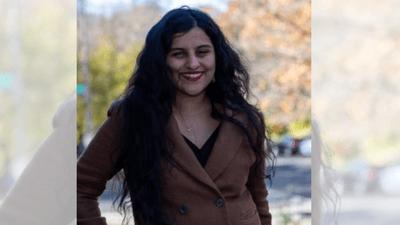
Last week, that quiet war erupted into a very public debate. **Neeraja Deshpande, a prominent Indian-origin policy and gender analyst, lit a fuse on social media platform X.** Responding to reports on the sustained popularity of arranged marriages among young South Asian Americans, she delivered a blistering critique aimed squarely at what she calls the "stunted immigrant anti-dating mindset."

*"Another hot take,"* she wrote, *"the Indian-American community needs to collectively throw out the stunted immigrant anti-dating mindset, and facilitate events and gatherings in which dating is socially acceptable."*
Her argument cuts to the bone of a generational fault line. Many immigrant parents, she contends, are operating on an outdated manual. They seek to replicate their own marital frameworks—forged in the social crucible of 1970s or 80s India—onto their American-raised children. The primary goal, often unspoken, becomes upholding tradition and pleasing the family elders, a notion Deshpande forcefully rejects. **"Family isn't about pleasing elders,"** she asserts, reframing the core unit around the partnership at its heart.
Her post was a Molotov cocktail of truth for many. *"Otherwise, parents can’t act surprised when their adult children, while professionally and even socially successful (because THAT is encouraged), are alone at 30,"* she added, highlighting the painful irony of celebrating ambition in every arena except the most intimate one.
This is not merely a debate about dating apps versus biodatas. It’s a fundamental clash over agency, context, and the very definition of a successful life. The parents' model, born in a society where marriage was a foundational social and economic alliance, collides with their children's reality in the West, where concepts of partnership are deeply entwined with individualism, romantic love, and personal fulfillment.
Yet, the story is rarely black and white. The discourse itself reveals an evolution already in motion. The stark 'arranged versus love' binary is crumbling. In its place, a **hybrid 'assisted' model** has gained traction for years—parents or networks make an introduction, but the ultimate choice, the dating, the veto power, rests unequivocally with the individuals.
This middle path acknowledges the value of familial connection and shared cultural roots while staunchly defending personal choice. It’s a renegotiation, not a rebellion.

The sentiment online is a churning sea of validation and backlash. Younger diaspora voices cheer Deshpande’s candor as a long-overdue airing of grievances. They speak of the exhausting duality—being praised as high-achieving professionals while being subtly (or not-so-subtly) shamed for not being married by a certain age. More traditional segments see the critique as a dangerous erosion of cultural bulwarks, a slippery slope toward the perceived individualism and instability of Western family structures.
What Deshpande’s intervention makes undeniable is that the conversation can no longer be had in whispers. The pressure to conform to an inherited template, without accounting for the soil in which the next generation is actually planted, is creating a silent crisis of loneliness and identity.
The question for the diaspora is no longer simply about how marriages are arranged. It is about how love is permitted to grow. It’s about whether a culture can be strong enough to hold two seemingly opposing truths: the deep, anchoring love for tradition, and the liberating, necessary love for self.



 14:34
14:34 14:04
14:04 15:04
15:04 04:04
04:04 09:04
09:04