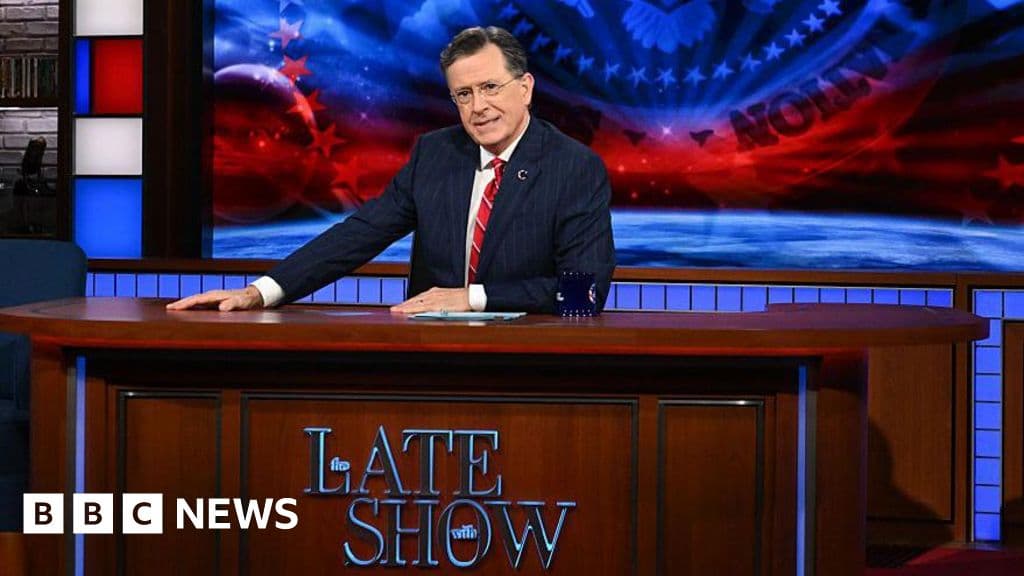
Colbert's F-Bomb: A Late-Night Host, A Spiked Interview, and the Ghost at the Feast
Author:AI News Curator
Published:February 18, 2026
Reading time3 min read
Views:0
Stephen Colbert claims CBS lawyers killed an interview with a scandal-plagued senator over FCC fears. The network and regulator deny it. But the story exposes the silent wires of power that media giants dance upon.
*Stephen Colbert's anecdote has ignited a firestorm over media independence. (File photo)*
The confession came not on his glittering CBS soundstage, but in the dimmer, more intimate haze of a comedy conference. On April 27, 2024, at the QED conference, Stephen Colbert—America's court jester turned primetime truth-teller—leaned into a mic and unleashed a story that cracked the polished facade of late-night television.
He recounted how, back in 2023, his team had booked Senator Bob Menendez. The New Jersey Democrat wasn't coming to talk policy; he was under the dark cloud of a federal bribery indictment, charged just weeks prior in September. It was exactly the kind of high-stakes, uncomfortable conversation Colbert's show is built for. But then, he said, the lawyers called.
**"We were told in no uncertain terms... that we could not have him on the broadcast,"** Colbert claimed, his voice a blend of frustration and theatrical relish. The reason? A chilling specter named the Federal Communications Commission. Specifically, Colbert pointed a finger at Republican FCC Commissioner Brendan Carr, suggesting the network feared its precious broadcast licenses—the lifeblood of its over-the-air business—could be threatened if they aired the chat with the embattled Democrat [[BBC News](https://www.bbc.com/news/articles/cx88n5y5z9jo)].
In that moment, Colbert painted a picture not of editorial judgment, but of corporate capitulation. A media giant, he implied, was bending the knee to perceived political pressure from a regulator.
***
CBS's response was a masterclass in corporate comms jiu-jitsu. They did not deny the interview was spiked. Instead, they reframed the *why*. In a statement, the network asserted it was a straightforward editorial call by its Standards & Practices team, relating to a **"pending legal matter"** involving the senator. The FCC, they insisted, had nothing to do with it [[BBC News](https://www.bbc.com/news/articles/cx88n5y5z9jo)].
From the other side of the regulatory table, the denial was even more absolute. A spokesperson for Commissioner Brendan Carr slammed Colbert's story as **"categorically false."** The FCC, they underscored, is an independent agency with a 3-2 Democratic majority. Its power is vast but specific: it oversees mergers, spectrum, and decency standards. It **does not** regulate the content of interviews. The nuclear option of revoking a broadcast license is tied to violations of federal law or regulation, not to booking decisions on a comedy talk show.

*Senator Menendez's federal indictment was the stated reason for CBS's editorial caution.*
So, we are left with a classic Washington and media standoff. Two contradictory realities. In one, a fearless host fights the system. In the other, prudent editors follow a standard playbook for legally sensitive guests, and a regulator shrugs, baffled by the accusation.
But the real story lives in the gap between them. It's a story about **perception** and **pre-emptive fear**. Whether or not Carr's ghost was in the room, Colbert's anecdote suggests that for CBS's legal team, the ghost was real enough. It reveals the intricate, often unseen dance media companies perform—a dance where the mere *specter* of regulatory disfavor can be as powerful as the regulation itself. In an era of heightened political polarization, where every institution is a battleground, the most potent censorship may not come from a government order, but from a lawyer's nervous, pre-emptive phone call.
Colbert, the storyteller, won the narrative day. He turned a spiked segment into a bigger, more viral story about power and silence. But the denials from CBS and the FCC are brick walls of official record. The truth, as it often does in the corridors of power and the green rooms of late-night TV, lies somewhere in the anxious, unspoken space between.



 14:37
14:37 14:07
14:07 15:07
15:07 04:07
04:07 09:07
09:07