How a site of terror was transformed into a living memorial, weaving grief, culture, and 40,000 white flowers into a story of collective healing.
In the days after the steel flashed and the screams fell silent, the people came. They came to the Bondi Junction Westfield not to shop, but to grieve. They laid down a carpet of blooms at the site’s entrance—a spontaneous, sprawling memorial of chrysanthemums, roses, and teddy bears that grew day by day, a fragile testament to a community’s shattered heart.
For weeks, that sea of color remained. Then, quietly, the transformation began.
The task was monumental: to guide a space stained by trauma on April 13, 2024—where six lives were torn away and countless others scarred—back to the realm of the living. Not by erasing the memory, but by weaving it into the very earth. The man handed this delicate mission was Jamie Durie, the celebrated landscape designer. But he knew this was not a job for one vision. It demanded many hands, many hearts.
"You don't just design a garden here," Durie understood. "You midwife a process of healing."
His first and most crucial collaborators were the traditional custodians of the land, the La Perouse Aboriginal community. In a profound act of cultural stewardship, local elders blessed the project, ensuring the memorial would speak to Country—to its ancient spirit of renewal. The design that emerged was not a cold, stone monument, but a living, breathing entity.
At its heart is **‘The Reflection.’**
Carved into the landscape is a massive, graceful form of a gum leaf—an icon of Australian resilience. Within its contours now bloom **over 40,000 white flowers**: chrysanthemums, signifying truth and honesty in many Asian cultures, and roses, a universal symbol of love and remembrance. The choice of white was deliberate—a color of peace, of mourning, and of new beginnings across continents.
But the magic, the true alchemy of this memorial, lies beneath the surface.
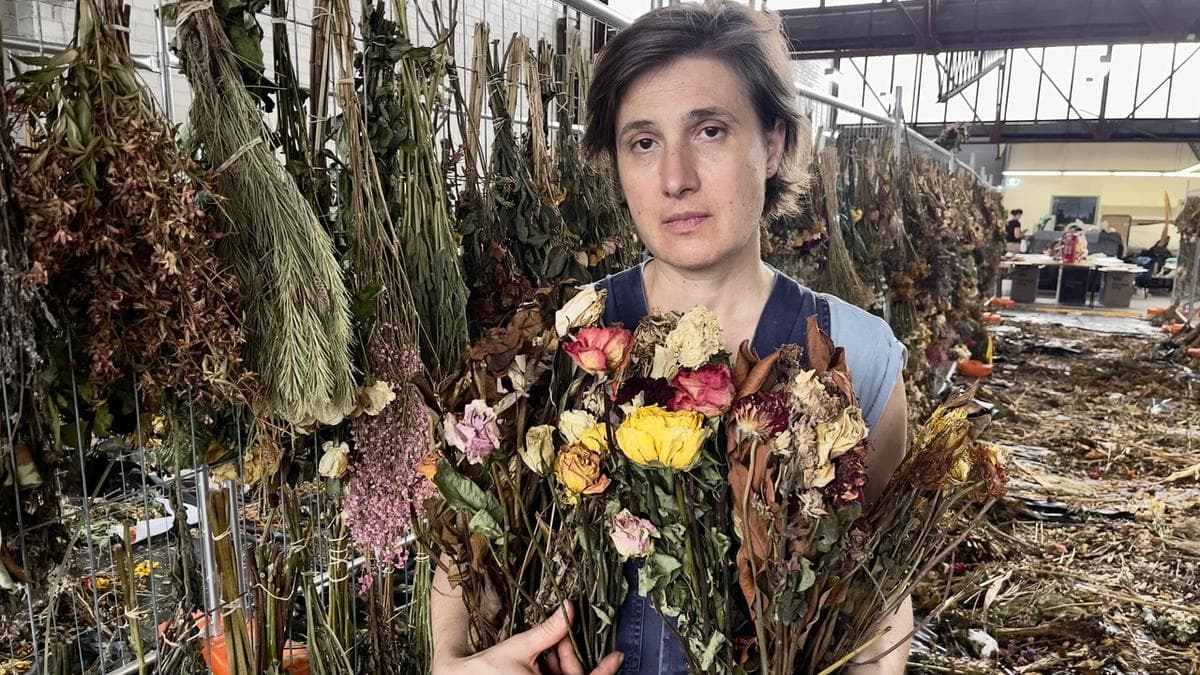
Before the new blooms were planted, teams meticulously gathered the soil from where the mountain of public tributes had lain. That earth, soaked with the tears of strangers and infused with the energy of countless handwritten notes, was not discarded. It was reverently integrated into the new garden beds. The memory of the spontaneous outpouring now literally feeds the roots of the permanent tribute.
This living memorial does not point to the sky; it grows from the ground. It honors the six who were lost—**Dawn Singleton, Jade Young, Pikria Darchia, Ashlee Good, Yixuan Cheng, and Faraz Tahir**—not with static names on a plaque, but through a cycle of life that continues. It is for the survivors who carry physical and invisible wounds, for the staff who witnessed horror, and for every shopper who will one day walk these halls again, seeking not fear, but solace.
On May 16, 2024, the centre partially reopened its doors. The first thing visitors encounter is no longer a ghost of violence, but a sanctuary of white petals and green leaves. It is a quiet, powerful rebuttal to chaos. A statement that from the deepest darkness, a community can choose to grow something beautiful, together.
From bloodshed, blooms.



 12:57
12:57 12:27
12:27 13:27
13:27 02:27
02:27 07:27
07:27