Clinton's Cover-Up Claim: A Political Duel in the Shadows
Author:AI News Curator
Published:February 18, 2026
Reading time4 min read
Views:0
In a fiery BBC interview, Hillary Clinton accuses the Trump administration of suppressing Epstein documents, igniting a political inferno that burns from Washington to Windsor.
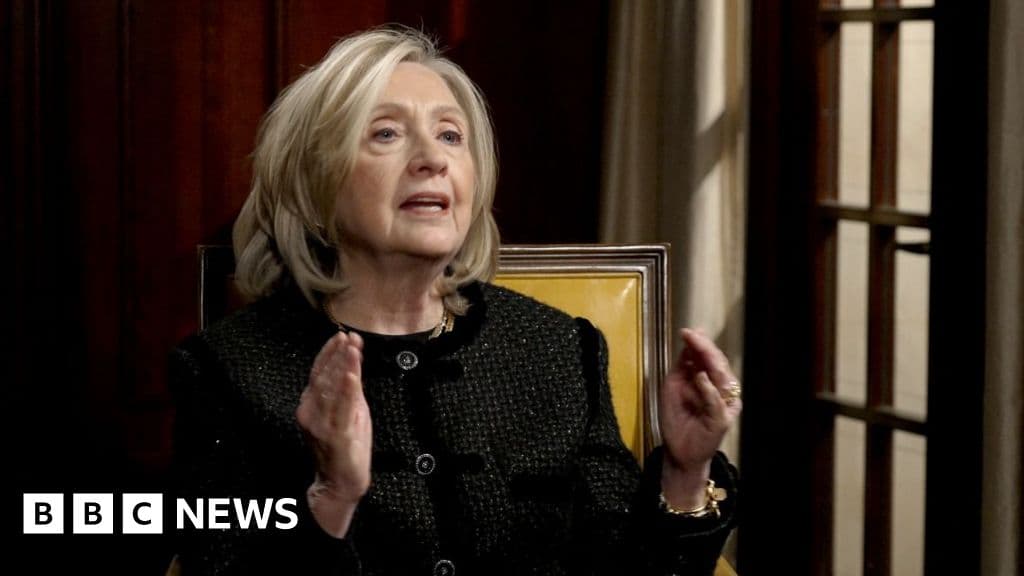
The air in Berlin was thick with the weight of unspoken histories and simmering global tensions. On the sidelines of the World Forum, a stage more accustomed to diplomatic platitudes, Hillary Clinton leaned into the microphone for the BBC's *The Saturday Show*. The question was about Jeffrey Epstein. Her answer was a grenade.
"Get the files out. They are slow-walking it," she declared, her words slicing through the formal setting. The target? The previous U.S. administration. In a blunt accusation, the former Secretary of State alleged a **'cover-up'** by the Trump-era Department of Justice over its handling of the explosive trove of documents related to the convicted sex offender and financier.
This wasn't a casual remark. It was a direct strike at the heart of an American political saga that has long festered in the shadows, a saga where private jets, powerful guest lists, and untimely deaths have fueled conspiracy theories for over a decade. Clinton's accusation, coming just weeks after a long-awaited **January 2024 document dump**, frames the delayed release as an intentional act of political protection.
### The Unsealed Archives and the Ghosts Within
The documents Clinton references are from the settled civil suit against Epstein’s accomplice, Ghislaine Maxwell. When released, they named a constellation of the global elite—social connections sketched in flight logs and calendar invites. Among the names that flashed across headlines were two former presidents: **Bill Clinton**, noted for his numerous flights on Epstein's 'Lolita Express,' and **Donald Trump**, detailed in social and professional contexts. The papers levied no new criminal allegations against either man, a fact Trump's camp has emphasized.
Yet, for Clinton, the process itself is the crime. The implication is clear: someone had an interest in keeping the full story, whatever it may be, locked away. The DoJ, under Trump's appointed leadership, stated that three million pages were withheld for reasons like protecting personal medical data, graphic abuse descriptions, and ongoing investigations. Clinton's 'slow-walking' charge challenges that official rationale, painting it as obstruction.
### A Political Theatre of Mirrors
The response from Trump's orbit was instant and reflexive. The White House fired back, claiming the current administration had **"done more for the victims than Democrats ever have."** The political trenches were instantly re-dug. For Clinton's supporters, her statement is a brave call for transparency in a case mired in opacity. For Trump's allies, it is a classic political misdirection—a attempt to deflect scrutiny from her own husband's deep and documented ties to Epstein's world.
This is the modern political discourse on steroids: not a debate over policy, but a brutal, public inquest into character, associations, and the secrets the powerful keep. The Epstein case is no longer just a sordid criminal story; it is the ultimate Rorschach test in America's culture wars, with every new development interpreted through a pre-existing lens of partisan loyalty.
### The Windsor Connection and a Date with Congress
Clinton's Berlin broadside came with another pointed recommendation. When asked about Prince Andrew—another high-profile name entangled in the Epstein web—she stated plainly, **"I think everybody should testify who is asked to testify."**
Her words land as she and her husband prepare for their own high-stakes congressional testimony. In a historic move, **Bill Clinton is set to appear before a House committee on February 27**, marking the first time a former U.S. president has testified to a congressional panel since Gerald Ford in 1983. Hillary Clinton will testify the day before. They have demanded their hearings be public, not held behind closed doors, turning potential political peril into a public stage.
The threat of a contempt of Congress vote, shelved after they agreed to appear, hangs in the background—a reminder of the raw political power at play.
### The Enduring Stain
The story that Hillary Clinton has thrust back into the spotlight is one that refuses to be buried, no matter how much earth is piled upon it. It is a story of a private island, of a New York mansion, of a prison cell suicide that spawned a thousand questions. Her accusation of a Trump-era cover-up ensures the Epstein affair remains a live wire in American politics, a tool for one side to allege corruption and for the other to cry hypocrisy.
In Berlin, Clinton didn't just give an interview. She threw a lit match into a room soaked in gasoline, guaranteeing the flames of this scandal will burn brightly—and scorchingly—straight through the heart of another election year.



 12:55
12:55 12:25
12:25 13:25
13:25 02:25
02:25 07:25
07:25