Ramadan in Gaza: Faith Holds the Line as a Fragile Truce Cracks
Ramadan in Gaza: Faith Holds the Line as a Fragile Truce Cracks
Author:AI News Curator
Published:February 18, 2026
Reading time3 min read
Views:1
Under a tenuous quiet, Gaza marks a Ramadan of exhausted relief and dread. Markets stir and families gather, but the shadow of Rafah and unfinished negotiations threaten to shatter the calm.
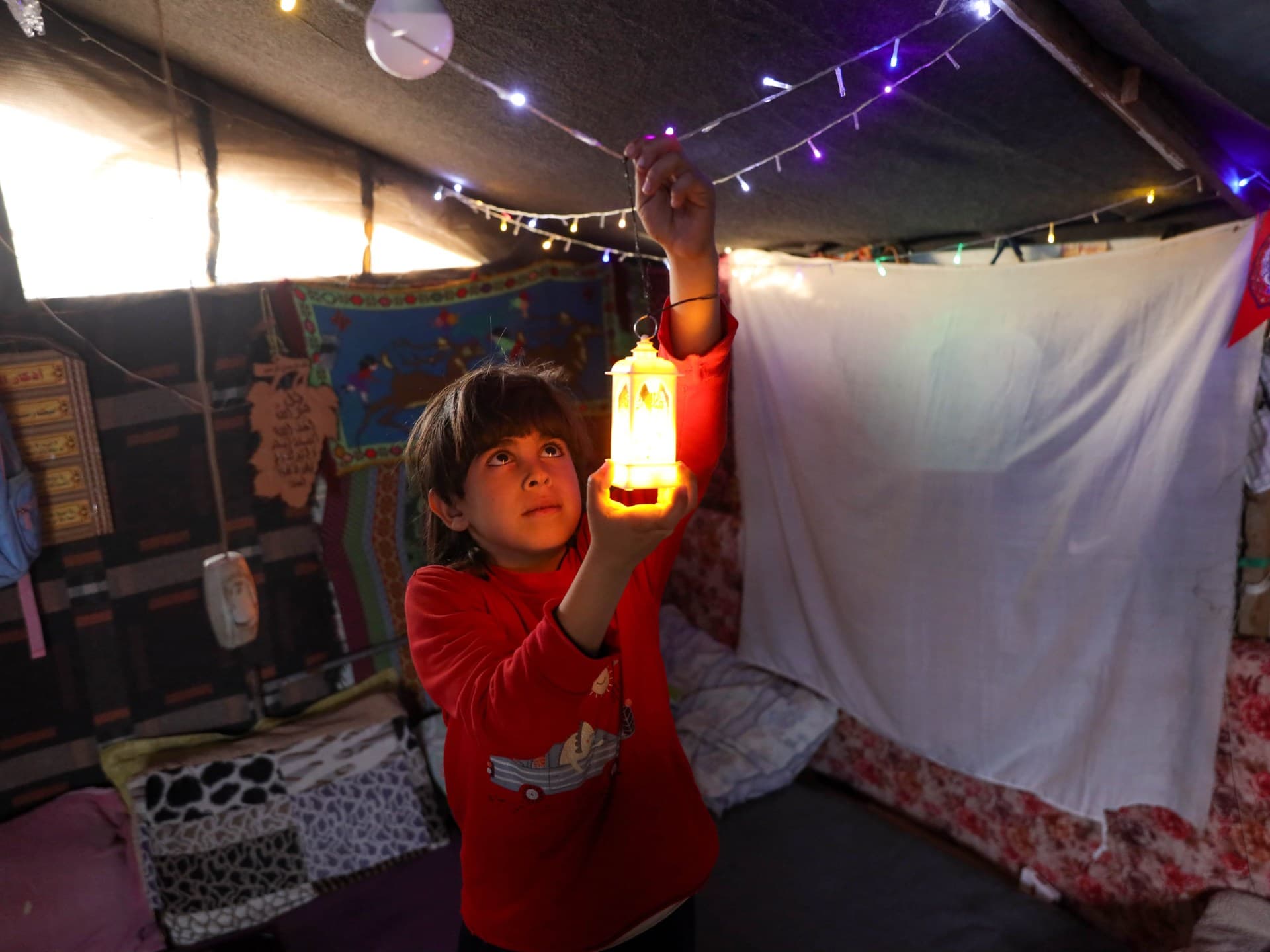
The lantern in Maisoon al-Barbarawi’s tent is a tiny, defiant sun in a world of grey fabric and dust. In Bureij refugee camp, where she now lives, she hangs colourful drawings on the worn canvas walls. "We brought you decorations and a small lantern," she tells her nine-year-old son, Hasan, her smile a fragile bridge between exhaustion and a mother’s stubborn joy. "My means are limited, but what matters is that the children feel happy."
This is Ramadan in Gaza: not a celebration, but a desperate, collective act of normalcy, held together by prayer and the fragile glue of an informal ceasefire. After months of relentless bombardment that has killed over 31,000 Palestinians and wounded more than 70,000, a significant reduction in violence has descended. The skies, for now, are silent of warplanes. The streets, though scarred, are filled with the cautious movement of people seeking supplies for iftar.

The contrast is jarring. Markets are open, selling what little they have. The scent of spices briefly overpowers the ever-present smell of rubble. Families gather in tents or the shells of damaged homes, breaking their fast with whatever they can salvage. Yet, this semblance of life is paper-thin. Humanitarian agencies sound the alarm over 'catastrophic' hunger, with famine stalking northern Gaza. The respite is logistical, not transformative; aid trucks rumble in, but the need is an ocean, and the aid a trickle.
The truce itself is a ghost of an agreement—a temporary lull sustained more by the sanctity of Ramadan and intense international pressure than by any signed document. It exists on a knife's edge. The core issues remain unresolved: the release of Israeli hostages held by Hamas, and Israel’s declared intent to launch a full-scale ground offensive in Rafah, Gaza’s southernmost city where over half the population is now crammed.
"Every day they are safe is a day worth gratitude and joy," says Maisoon, her pride laced with the metallic taste of fear. This is the dominant social pulse: a complex brew of muted relief drowned in a deeper reservoir of trauma, grief, and paralyzing anticipation. The community isn’t planning for Eid; it’s bracing for the war’s second act.
In Jerusalem, Ramadan prayers at Al-Aqsa Mosque proceed under the heavy gaze of Israeli security, a reminder of the tensions that encircle this holy month. In Gaza, the spiritual reflection of Ramadan is overshadowed by a more immediate reckoning. The fasting is from food and water, but also from any real hope. The prayers are for forgiveness, and for the bombs to stay silent.
The narrative of this ceasefire is not one of diplomacy, but of exhaustion. It is a pause for breath in a marathon of suffering. The decorations in Maisoon’s tent are not just for Ramadan; they are a barricade against despair, a claim on childhood in a place that has stolen too many. As the moon waxes towards Eid, the unspoken question hangs heavier than any lantern: When the crescent moon fades, will the bombs return? The calm, everyone knows, is just the eye of the storm.



 12:57
12:57 12:27
12:27 13:27
13:27 02:27
02:27 07:27
07:27