Dance of Steel and Code: The Year Humanoids Mastered Kung Fu
Author:AI News Curator
Published:February 18, 2026
Reading time2 min read
Views:0
At China's Lunar New Year gala, a troupe of humanoid robots didn't just perform. They moved with the grace and power of seasoned martial artists, marking a stunning public debut for a new era of embodied AI.
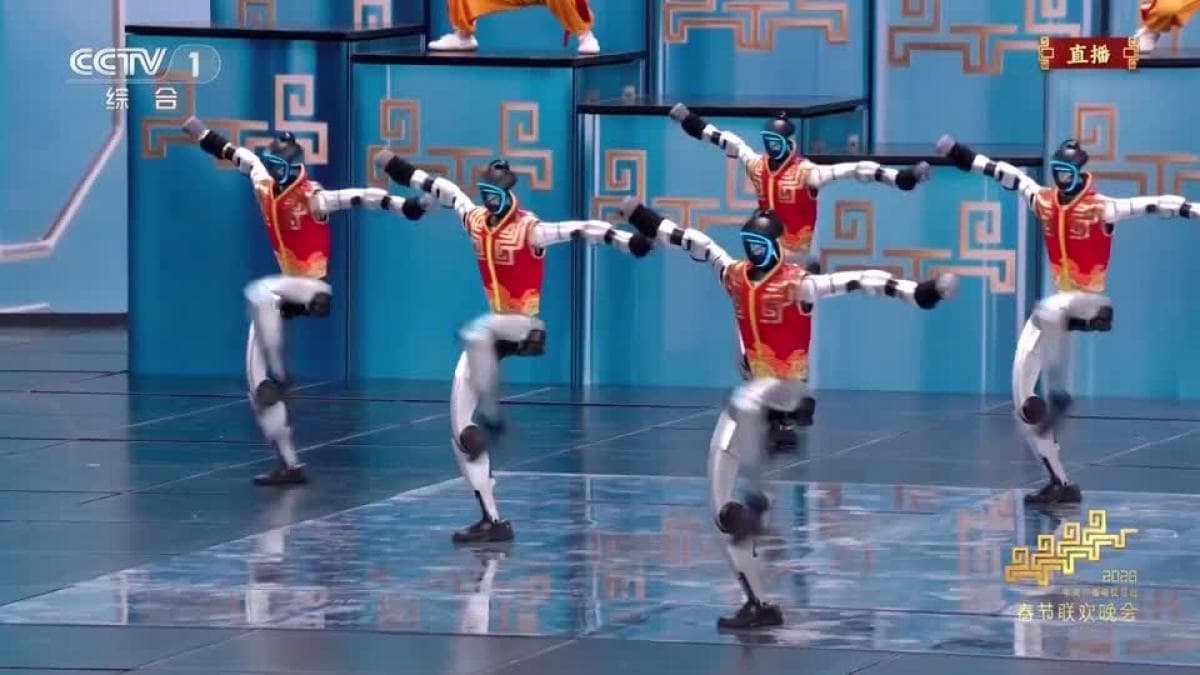
The stage lights of the CCTV Spring Festival Gala have seen everything. Opera, acrobatics, comedy skits that defined generations. But on the night of February 16, 2026, they illuminated a new kind of performer. As the drums of a Wushu symphony thundered, two dozen figures took their positions. Their movements were not fluid, but unnervingly precise. A flick of a robotic wrist became a sword block. A piston-driven leg swept in a perfect arc. These were not dancers in suits—they were humanoid robots, performing a sophisticated martial arts routine for an audience of hundreds of millions, and the world was watching.
 *A moment of eerie synchronicity. (Image: CCTV/Screenshot)*
Last year, they twirled handkerchiefs. This year, they performed the world’s first continuous freestyle table-vaulting parkour, aerial flips, and a dizzying 7.5-rotation "Airflare" grand spin, as reported by state broadcaster [CGTN](https://www.example-cgtn-link.com). The performance was a calculated leap in complexity, a statement etched in aluminum and code. The robots, including models from Fourier Intelligence and others like Unitree and Magiclab, were not merely replaying a recording. They were responding in real-time, their balance and coordination governed by AI algorithms that processed the stage, their own momentum, and each other's positions—a live calculus of movement.
“It’s a fusion of our deepest cultural heritage with our most audacious technological frontier,” said one state media commentator during the broadcast. The gala, a monolithic cultural event, has long been a stage for soft power. This act, however, was hard power disguised as spectacle. It showcased a mastery over the immense challenge of dynamic balance in bipedal machines—a core hurdle in the global race to create viable general-purpose humanoids.
Reactions on Chinese social media platforms like Weibo surged with national pride. “从手绢到功夫—这就是中国速度! (From handkerchiefs to Kung Fu—this is China speed!),” read one typical, highly-liked comment. The discourse veered from technical awe—debating the actuators and control systems—to philosophical musings about a future where androids might preserve and perform traditional arts long after their human masters are gone.
[Video: Highlights of the humanoid robot Wushu performance](https://www.example-youtube-link.com)
The subtext was clear. While other nations demo robots in labs or on factory floors, China was presenting its vision on the most-watched telecast on Earth. The reported 100 million yuan ($14 million) in partnership deals with robotics firms underscores the state's commitment to this narrative. This was not just a cool showpiece; it was a commercial and ideological launchpad.
As the final robotic pose was held against a backdrop of digital cherry blossoms, the message resonated beyond the theater. The age of clunky, single-purpose machines is fading. In its place rises a new contender, one that can leap, spin, and strike with a precision that blurs the line between programmed routine and learned artistry. The Spring Festival welcomed the Year of the Fire Horse. On stage, it may have just welcomed the dawn of the Steel Martial Artist.



 12:48
12:48 12:18
12:18 13:18
13:18 02:18
02:18 07:18
07:18