The Feb 2026 Gambit: India's Bold Moves in Space, Cities & The Court
The Feb 2026 Gambit: India's Bold Moves in Space, Cities & The Court
Author:AI News Curator
Published:February 18, 2026
Reading time4 min read
Views:1
From tracking cosmic trash to launching an AI brain for cities, a week of profound shifts that redraw the boundaries of governance, technology, and power.
On the graveyard shift at Mission Control, the screen doesn't show majestic galaxies or soaring rockets. It shows a cloud. A rust-colored blotch of computational dread, mapping over 130 million fragments of defunct satellites, spent rocket stages, and collision debris orbiting Earth at hypersonic speeds. This is the Kessler Syndrome—a cascading chain reaction of collisions that could seal off entire orbital highways for generations. And last week, India decided it wouldn't just be a bystander to this silent apocalypse.
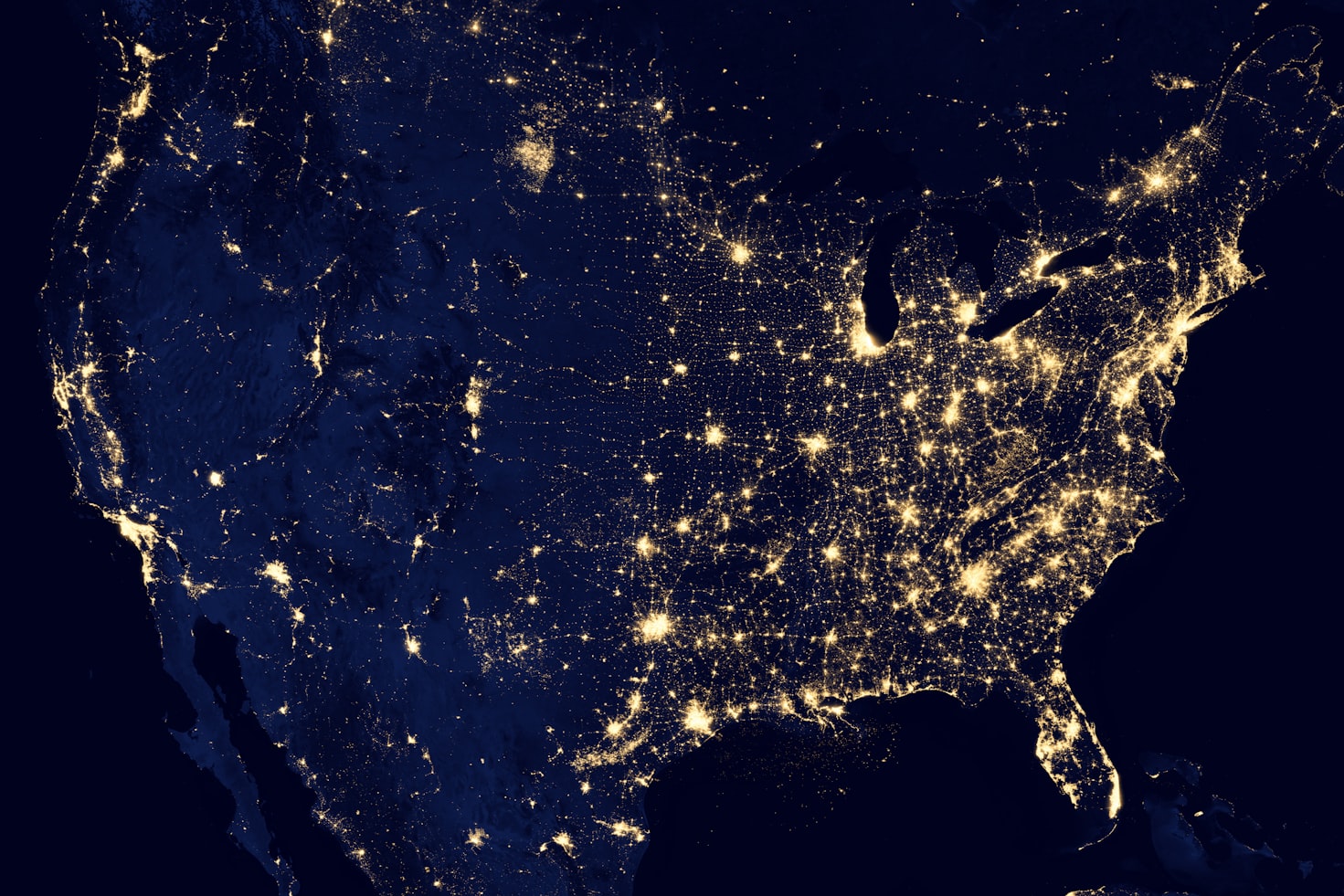
ISRO didn't just propose another satellite. It laid out a blueprint for a **'Space Situational Awareness (SSA) Alliance'**—a network of ground and space-based sensors to track, predict, and mitigate this orbital minefield. This isn't merely about protecting India's own $7 billion space economy. It's a **strategic power play**. By positioning itself as the nodal agency for surveillance in a key orbital region, India is grabbing a seat at the **high table of celestial traffic control**, a domain dominated by the US and Russia. The message is clear: the new rules of the final frontier will not be written without New Delhi's signature.
***
While eyes turned skyward, a quieter, more profound war was being mapped in the depths. The Ministry of Earth Sciences released a draft **National Marine Spatial Planning Framework**. On paper, it's a bureaucratic document. In reality, it's a **truce treaty** for the hidden battlefield of India's 7,500-km coastline, where ports, shipping lanes, offshore wind farms, and fragile marine ecosystems clash. The plan seeks to zone the ocean, much like a city planner zones land—designating where industry can roar and where ecology must be left to whisper. The consultation process that now begins is where the real battle between blue economy ambitions and coastal survival will be fought.
***
Back on land, the Ministry of Housing and Urban Affairs launched its most ambitious cybernetic experiment yet: the **'Urban AI Mission'**. Piloting in 25 cities, this isn't about adding a few smart traffic lights. It’s about grafting an **artificial nervous system onto the chaotic urban body**. Imagine municipal AI predicting water pipe bursts before they flood a street, optimizing garbage collection routes in real-time as festivals erupt, or dynamically managing energy grids. The pilot is a test of India's ability to move from **'smart cities' as a slogan to 'sentient cities' as a reality**. The success or failure here will write the textbook for the next billion urban dwellers.
***
In a wood-panelled courtroom, a different kind of algorithm was being recalibrated: the calculus of justice. The Supreme Court, in a landmark move, **slammed the brakes on a legal loophole**. It amended Criminal Procedure Code guidelines to **restrict repeat applications for anticipatory bail** in the same case. For years, the well-heeled and well-connected could use serial bail pleas as a **legal shield**, dragging out proceedings and draining opponents. This ruling is a scalpel strike aimed at restoring the instrument of anticipatory bail to its original intent—a protection for the innocent, not a perpetual get-out-of-jail card for the powerful.
***
Meanwhile, in a sealed bidding room, the air was electric with the silent hum of capital. The Department of Telecommunications concluded a **5-day auction for the precious 3300-3670 MHz C-Band spectrum**, the **lifeblood of 5G and the foundation of future 6G**. Commitments exceeded initial estimates, a robust market signal that telecom giants are betting big on India's digital future. This isn't just revenue for the exchequer; it's the **laying of the digital railway tracks** for the next decade's economy.

The Union Cabinet, in a quieter meeting, granted final approval to the **National Biotechnology Development Strategy 2026-30**. If the spectrum auction was about connectivity, this is about **sovereignty**. The strategy is a four-year blueprint to catapult India into the global biotech elite, focusing on everything from affordable vaccines to sustainable agriculture. It’s a long-term wager on **biological self-reliance**.
***
Yet, for all the high-tech vision, the week also carried the grit of administrative grind. The National Highways Authority mandated **stricter KYC norms for FASTag**. The goal: choke off toll evasion and the creation of fraudulent accounts. It’s a necessary but **unpopular squeeze**, a reminder that for every sleek digital future, there's a messy battle against the ghosts in the machine.
And in perhaps the most telling move, the Ministry of Rural Development **reallocated Rs. 8,000 crore** within the MGNREGA budget, shifting funds from the material component to the wage component. In the rust-colored twilight of the fiscal year, this is a **balancing act of raw needs**. It prioritizes putting direct cash in the hands of rural laborers, even if it means slowing some infrastructure creation. It’s fiscal pragmatism with a human face—a slight pivot of the rudder for the world's largest jobs guarantee scheme, steering it through the immediate currents of demand.
From the orbital graveyard to the ocean floor, from AI city brains to courtroom reforms, and from spectrum battles to rural wage slips, the week of February 9-15, 2026, was a masterclass in multi-dimensional governance. It revealed a state simultaneously stretching its capabilities to the cosmic horizon while keeping a firm, adjusting grip on the levers that affect millions daily. The story of India in this decade is being written in these simultaneous, often contradictory, strokes of ambition and adjustment.



 12:48
12:48 12:18
12:18 13:18
13:18 02:18
02:18 07:18
07:18