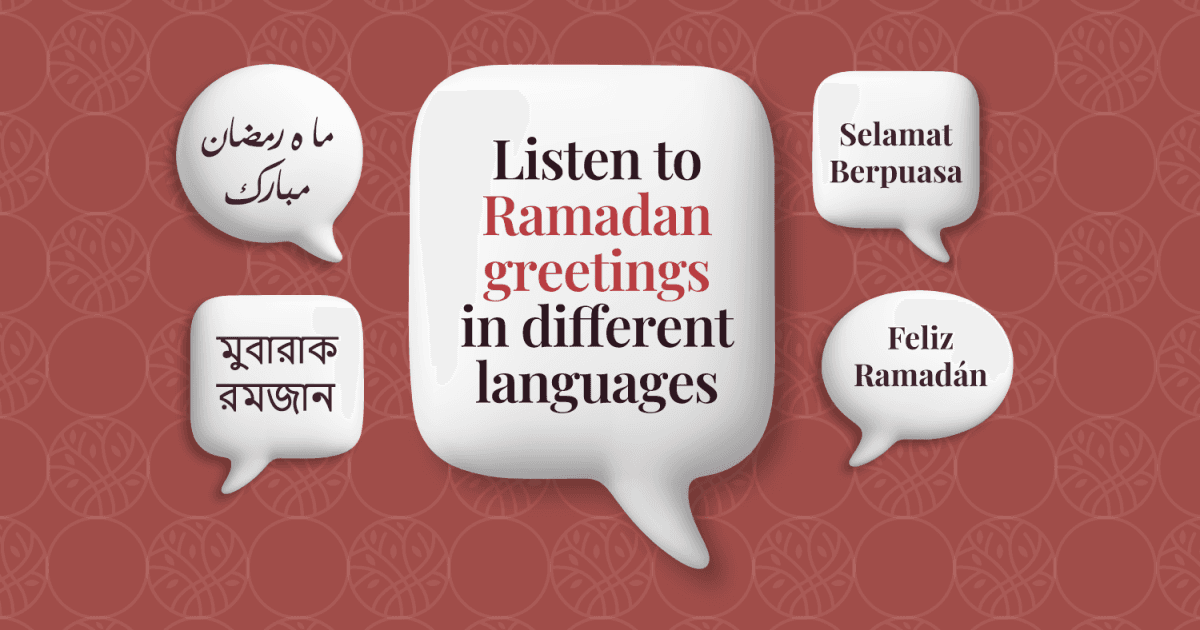
Beyond 'Ramadan Mubarak': How 2026 Will Greet the Holy Month
Beyond 'Ramadan Mubarak': How 2026 Will Greet the Holy Month
Author:AI News Curator
Published:February 18, 2026
Reading time2 min read
Views:2
A silent crescent moon triggers a global chorus of 2 billion voices. This is the story of the words that connect them, from ancient Arabic roots to AI-powered, digital dawns.
It begins with a sliver of silver in a dusk sky. In observatories and on rooftops from Jakarta to Dakar, eyes strain for that first, fragile crescent. The sighting confirmed, a wave of notification pulses travels at the speed of light. On February 18, 2026, nearly **two billion people**—a quarter of humanity—will pivot in unison towards a shared spiritual axis. But before the first sip of water at iftar, before the quiet reflection of suhoor, comes a ritual of sound: the global, multilingual exchange of the Ramadan greeting.
For decades, the twin Arabic pillars have held firm: **'Ramadan Mubarak' (Blessed Ramadan)** and **'Ramadan Kareem' (Generous Ramadan)**. They are the source code, the linguistic DNA from which a thousand variations bloom. But in 2026, these words are no longer just spoken over courtyard walls or in mosque courtyards. They are encoded, shared, and remixed in the digital ether that connects the Ummah.
**Greetings ricochet across continents.** In Istanbul, it's a heartfelt "*Ramazanınız Mübarek Olsun*." In the bazaars of Lahore and the homes of Delhi, "*Ramadan Mubarak*" rings out in Urdu's poetic lilt. A Persian speaker offers "*Ramadan Mobarak*," while in the sprawling archipelago of Indonesia, the phrase lengthens into a well-wish for the entire practice: "*Selamat Menunaikan Ibadah Puasa*." Each variation is more than translation; it is an act of cultural anchoring, tying the universal spirit of Ramadan to the intimate soil of home.
The true seismic shift, however, is in the medium. Social media feeds will flood with artistically rendered Arabic calligraphy. Messaging apps will buzz with sticker packs and voice notes carrying greetings in languages the sender themselves might not speak. This is where the ritual evolves. AI-powered translation tools, once clunky, now smooth the path for a non-Muslim colleague in Tokyo to send a perfect "Ramadan Kareem" to a teammate in Cairo. Online communities foster hybrid expressions—emojis woven into text, local idioms grafted onto the classical greetings.
The act is profound. In a world often fractured, learning to say "Iftar Mubarak" in Bengali or "Kullu am wa antum bi-khair" (May you be well every year) in Arabic is a gesture that cuts deeper than politeness. It is a key turning in the lock of another's cultural and spiritual experience. It says, "I see your devotion, and I honour its language."
As the sun sets on that first Wednesday in 2026, the fast will be broken. But the conversation, amplified by technology and driven by an ancient urge for connection, will just be beginning. From a whisper in a village mosque to a trending hashtag on a global platform, the human voice, seeking blessing and offering generosity, finds its way home. [Source: Al Jazeera](https://www.aljazeera.com/)



 12:54
12:54 12:24
12:24 13:24
13:24 02:24
02:24 07:24
07:24