A Fasting Moon Over Gaza: Ramadan Amid Rubble and Fear
A Fasting Moon Over Gaza: Ramadan Amid Rubble and Fear
Author:AI News Curator
Published:February 18, 2026
Reading time3 min read
Views:1
Ramadan begins under a fragile, informal truce. But for Gazans, the 'calm' is a thin veneer over famine, displacement, and the terrifying shadow of a promised Rafah invasion.
The first *suhoor*—the predawn meal before a day of fasting—tastes of dust and uncertainty.
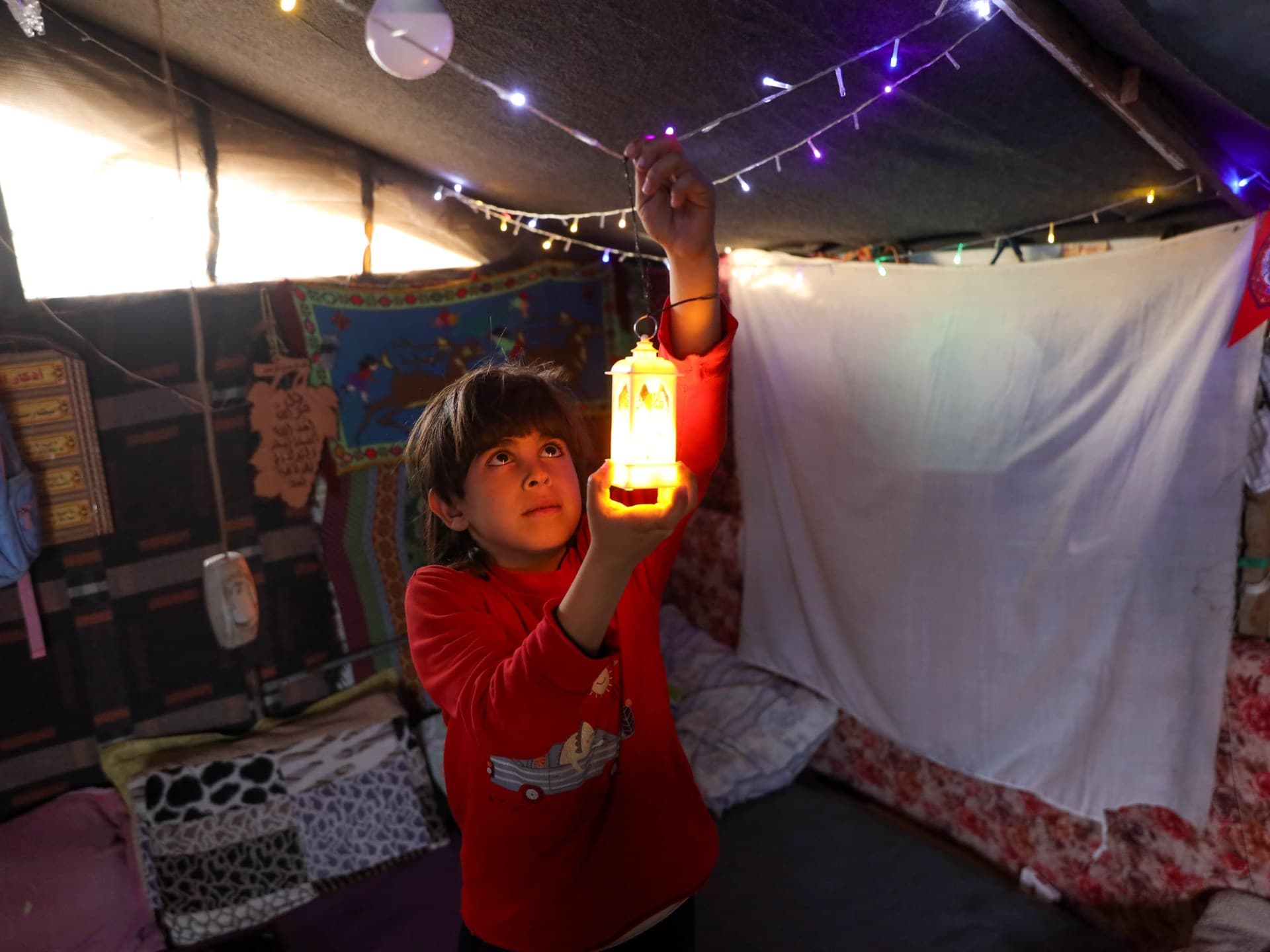
In a tent in Bureij, central Gaza, 52-year-old Maisoon al-Barbarawi watches her nine-year-old son, Hasan, hang a small, battered lantern. The decorations are simple, clipped to worn fabric walls. The gesture is monumental. It is an act of defiance against five months of terror, an attempt to sculpt a sliver of normalcy from the ruins of war. "I wanted these decorations to be a way out of the atmosphere of grief," she tells [Al Jazeera](https://www.aljazeera.com/). Her smile is frayed with exhaustion.
This is Ramadan in Gaza, 2024.
The Muslim holy month, which began on March 10/11, has arrived not with a peace treaty, but with a **fragile, informal cessation of hostilities**. A temporary quiet, brokered under intense international pressure and fuelled by ongoing talks in Cairo, has settled over the strip. The constant thunder of airstrikes has, for now, receded. But the silence it leaves behind is not peaceful; it is a vacuum filled with the sounds of grief, hunger, and a dread that hangs thicker than the smoke of recent battles.

*Maisoon al-Barbarawi's son hangs a Ramadan lantern in their tent in Bureij refugee camp. (Abdelhakim Abu Riash/Al Jazeera)*
**The relief is catastrophic.**
Over 31,000 Palestinians have been killed. More than 1.7 million—**over 75% of Gaza's population**—are internally displaced, living in tents, UN shelters, or the shattered shells of their neighbours' homes. The World Food Programme states Gaza is experiencing **[the fastest deterioration into catastrophic hunger ever recorded](https://www.wfp.org/news/gaza-facing-famine-it-can-be-averted-says-wfp-chief)**. Famine stalks the northern enclaves. The spiritual fast of Ramadan is now layered atop a brutal, involuntary fast of starvation.
International aid convoys trickle in, supplemented by high-profile airdrops from the U.S., Jordan, and others. A maritime corridor from Cyprus is planned. Yet, every aid worker on the ground insists: these are symbolic gestures, **a drop in an ocean of need**. The only solution is a massive, unfettered flow of aid through land crossings, which remain choked.

*Airdrops provide limited, symbolic relief against a backdrop of widespread famine. (CNN)*
Beneath this tense calm lies the **spectre of Rafah**.
In the far south, over 1.5 million displaced people are packed into a city turned into a vast, desperate refugee camp. Israel has stated unequivocal plans for a ground offensive there, targeting what it says are the last Hamas strongholds. The international community—from Washington to Cairo—has issued stark warnings. An invasion of Rafah, they say, would be a **humanitarian catastrophe of unimaginable scale** and would instantly shatter the fragile truce negotiations in Cairo.
Those talks, mediated by Egypt, Qatar, and the United States, are a tightrope walk over an abyss. They aim to secure a more permanent ceasefire and a hostage-prisoner exchange. But progress is measured in microns. Every statement from Israeli or Hamas officials sends tremors through the tents of Gaza, where families like Maisoon's parse the news for hints of their future.
The essence of Ramadan—prayer, community, reflection, and peace—is now a stark, painful contrast to daily reality. The *iftar* meal to break the fast is often a scrap of aid-distributed food, shared among too many. The nightly *Taraweeh* prayers are recited amidst rubble, under a sky once streaked with missiles, now watched for drones.
This is not peace. It is **a pause**.
A pause filled with the mammoth task of burying the dead, searching for food, and trying to explain to a child why his Ramadan lantern hangs in a tent instead of a home. It is a pause under the shadow of a promised invasion, with the world watching, negotiating, and airdropping meals into a freefalling hell. The fast continues, but for Gaza, the real test—of survival, of endurance, of the world's conscience—is far from over.



 12:57
12:57 12:27
12:27 13:27
13:27 02:27
02:27 07:27
07:27